Discovering Paris: A Journey Through History, Geography & Essential Facts
Paris, the vibrant capital of France, stands as an undisputed global epicenter of art, fashion, gastronomy, and culture. Often referred to as the "City of Light" (La Ville Lumière), its allure is timeless, drawing millions of visitors annually to explore its romantic boulevards, iconic landmarks, and rich tapestry of history. More than just a collection of postcard-perfect sights, Paris is a living museum, a dynamic metropolis where every cobbled street and grand avenue tells a story. From its ancient origins as a Roman settlement to its modern-day status as a beacon of innovation and style, understanding Paris involves delving deep into its past, appreciating its unique geographical layout, and grasping the essential facts that define its present.A Glimpse into Paris's Rich History
The story of Paris is one of remarkable evolution, resilience, and transformation, spanning over two millennia. Its roots trace back to the third century BC, when a Celtic tribe known as the Parisii settled on the Île de la Cité, giving the nascent settlement its name.From Lutetia to the Capetian Era
Under Roman rule, the settlement flourished as Lutetia Parisiorum, a strategically important town complete with baths, an amphitheater, and a forum on the Left Bank. The remnants of this Roman past can still be explored today, particularly in the Latin Quarter. After the fall of the Roman Empire, the city steadily grew, establishing its significance under Clovis I, who made Paris his capital in 508 AD. The Middle Ages saw Paris emerge as a prominent European center for learning and religion, with the Sorbonne University founded in the 12th century and the majestic Notre-Dame Cathedral beginning its construction in 1163. The Seine River played a crucial role, serving as both a defensive barrier and a vital commercial artery, fostering trade and connecting the city to wider regions.
The Rise of Royal Power and Urban Grandeur
During the Renaissance and the subsequent centuries of monarchical rule, Paris cemented its status as a grand capital. Kings like Francis I adorned the city with Renaissance architecture, including parts of the Louvre Palace. Later, Louis XIV, though famously relocating his court to Versailles, ensured Paris remained the cultural and political heart of France. The 18th century was a period of intellectual ferment, with Paris becoming the crucible of the Enlightenment, giving birth to ideas that would shake the foundations of Europe.
Revolution, Empire, and Modernization
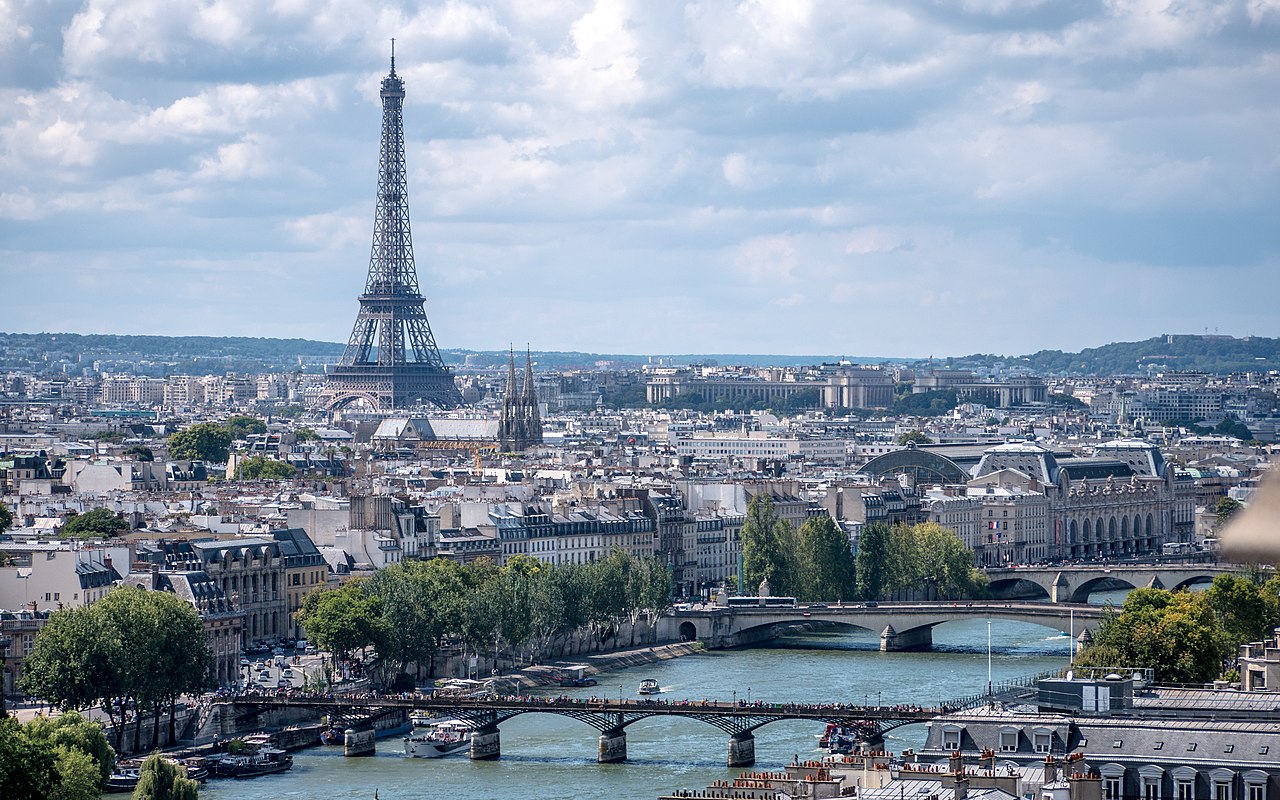
The French Revolution, exploding in 1789, dramatically reshaped Paris and the world. Key events like the storming of the Bastille and the Reign of Terror unfolded on its streets, forever embedding the ideals of liberty, equality, and fraternity into the city's identity. The Napoleonic era further left its mark with monumental architecture like the Arc de Triomphe. However, it was during the Second Empire, under Napoleon III and his prefect Baron Haussmann, that Paris underwent its most radical transformation. From the 1850s to the 1870s, Haussmann tore down medieval districts, creating the wide, tree-lined boulevards, grand public parks, and harmonious building facades that define the city's aesthetic to this day. This period also saw the construction of iconic structures like the Opéra Garnier and, leading up to the 1889 Universal Exposition, the breathtaking Eiffel Tower, which has since become the universal symbol of Paris.
The Unique Geography and Layout of the City of Light
Paris's geography is intrinsically linked to the winding course of the Seine River, which bisects the city and has fundamentally shaped its development and character.The Seine: Dividing and Unifying
The Seine divides Paris into two distinct halves: the Rive Droite (Right Bank) to the north, traditionally associated with commerce, finance, and grand boulevards, and the Rive Gauche (Left Bank) to the south, renowned for its intellectual and artistic heritage, universities, and bohemian charm. The river is not merely a geographical feature but a historical artery, with its banks and numerous bridges offering iconic views and serving as a UNESCO World Heritage site. Nestled in the heart of the Seine are two natural islands: the Île de la Cité, the ancient core of Paris and home to Notre-Dame, and the smaller, more residential Île Saint-Louis.
The Arrondissements: A Spiraling System
Paris is meticulously organized into 20 administrative districts, or arrondissements, which spiral clockwise outwards from the city center, starting with the 1st arrondissement on the Right Bank. Each arrondissement possesses its own distinct personality, landmarks, and local feel. For instance, the 1st is home to the Louvre, the 4th encompasses the Marais and parts of Île de la Cité, the 7th boasts the Eiffel Tower, and the 18th is famous for Montmartre and Sacré-Cœur. This logical numbering system makes navigation relatively straightforward for visitors.
Beyond the City Limits: Île-de-France
While the compact "intra-muros" (within the walls) Paris is remarkably dense, the greater metropolitan area extends into the surrounding Île-de-France region. This wider area includes important sites like the Palace of Versailles, Disneyland Paris, and Charles de Gaulle Airport, demonstrating the capital's expansive influence and reach.
Essential Facts for Every Paris Enthusiast
To truly appreciate Paris, it helps to understand some key figures and aspects of its contemporary life.Population and Economic Powerhouse
The city of Paris itself has a population of over 2 million residents, but the greater Île-de-France region is home to over 12 million, making it one of Europe's largest metropolitan areas. As an economic powerhouse, Paris is a global leader in business, finance, fashion, luxury goods, tourism, and innovation. Many multinational corporations have their European headquarters here, and the city consistently ranks among the most influential in the world.
A Hub of Culture and Art
Paris boasts an unparalleled concentration of museums and galleries. From the incomparable collections of the Louvre Museum and the Impressionist masterpieces at the Musée d'Orsay to the modern art at the Centre Pompidou, there's an endless array of artistic treasures. The city's cultural scene extends to world-class opera houses, theaters, and music venues, ensuring that there's always something stimulating to experience. Furthermore, Parisian cuisine is legendary, from Michelin-starred restaurants to charming bistros and delectable patisseries, reflecting a deep-seated culinary tradition.
Modern Parisian Life and Sports
Beyond its historical facade, Paris is a vibrant, modern city with a dynamic contemporary culture. It's a fashion capital, setting global trends, and a center for technological innovation. For sports enthusiasts, Paris is home to world-renowned events like the French Open tennis tournament and the finish line of the Tour de France. The city also proudly hosts one of the most famous football clubs globally: Paris Saint-Germain (PSG). Fans from around the world eagerly follow their favorite team, and for many, keeping up with the latest paris saint-germain lineups is an essential part of their connection to the club and the city's sporting pulse. While this article focuses on the city's broader historical and geographical context, PSG represents a significant aspect of modern Parisian identity and passion.
Practicalities: Getting Around and Climate
The city's efficient public transportation system, particularly the Métro, makes navigating Paris incredibly easy. With over 300 stations, most attractions are just a short walk from a Métro stop. Paris experiences a temperate climate with distinct seasons: mild springs, warm summers, pleasant autumns, and cool winters. Each season offers a different charm, making it a year-round destination.
Planning Your Unforgettable Parisian Adventure
Embarking on a trip to Paris is an exciting prospect, and with a little planning, you can ensure a truly memorable experience.Best Time to Visit
Spring (April-May) and autumn (September-October) offer the most pleasant weather and fewer crowds than the peak summer months. However, Paris is enchanting in winter with its Christmas markets and cozy cafes, and summer brings vibrant street life and long daylight hours.
Accommodation and Getting Around
Choose your accommodation based on your budget and interests, remembering that each arrondissement offers a unique vibe. The Métro is your best friend for transportation; consider a multi-day pass like the Paris Visite or Navigo Découverte. Don't forget to wear comfortable shoes – walking is often the best way to soak in the city's beauty!
Must-See Attractions and Cultural Immersion
Beyond the obvious landmarks, explore lesser-known museums, stroll through charming neighborhoods like Le Marais or Saint-Germain-des-Prés, and spend time people-watching from a café terrace. Embrace the local culture by trying French phrases, sampling regional specialties, and enjoying a leisurely picnic by the Seine. For more detailed itineraries and practical advice tailored to first-time visitors or repeat travelers, be sure to check out our comprehensive guide on Planning Your Paris Trip: Essential Tips & Itineraries. Additionally, for the most up-to-date information on local services, events, and official city news, refer to our Paris City Guide: Official News, Services & Events Info.
Embracing the Parisian Spirit
Paris is a city that rewards exploration and a willingness to simply wander. While planning is helpful, also leave room for serendipity. Discover a hidden park, stumble upon a local market, or simply sit and observe Parisian life unfold around you. It's in these moments that the true magic of the City of Light reveals itself.
From its ancient Roman foundations to its current status as a global trendsetter, Paris remains a city of profound historical depth, distinct geographical charm, and endless cultural fascination. Whether you're captivated by its architectural wonders, its culinary delights, its artistic heritage, or its modern sporting passions, Paris offers an experience unlike any other. It truly is a city that continues to inspire, enchant, and draw visitors back again and again.